How We Started: From Church Parking Lot to County-Wide Ministry
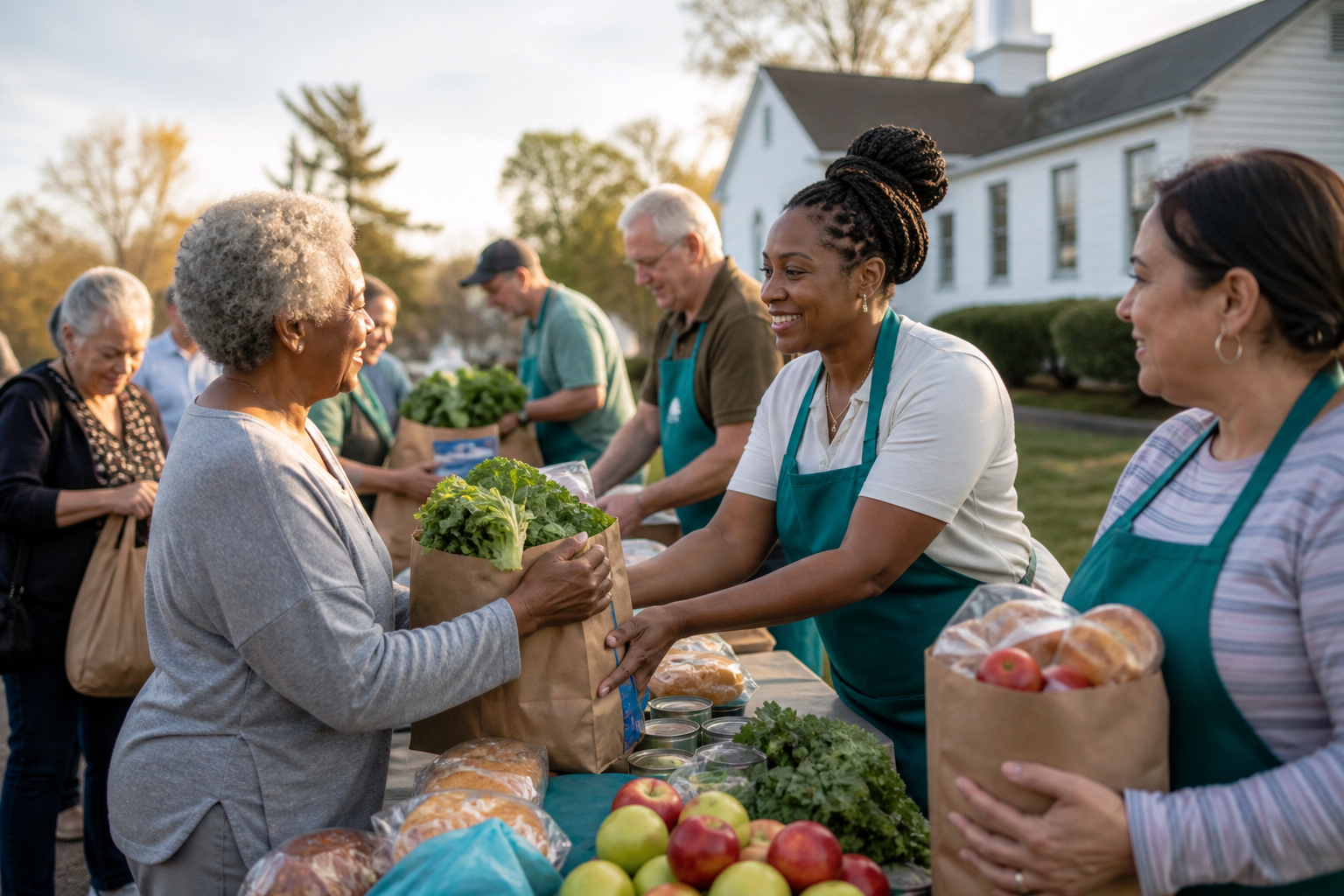
Charity Food Ministry did not begin with a strategic plan, a budget, or a board meeting. It began with two folding tables in a church parking lot, a handful of grocery bags packed from our own kitchens, and a small group of people who had noticed that neighbors in Chester were going hungry and had run out of reasons to wait for someone else to act.
The First Saturday
We set up expecting to serve a few families we already knew by name. We ran out of food before the morning was over, and we sent people home empty-handed — which is a thing you only have to experience once before it changes how seriously you take the work.
What surprised us was who came. Not strangers from far away, but people from our own street. Working parents between paychecks. A widow on a fixed income. A young family whose hours had been cut. Hunger in Chester County was not somewhere else. It was two doors down, and it had been quiet about it for a long time.
Learning by Doing
Everything we know now, we learned the hard way. We learned that people arrive early, so opening late means someone stands in the cold. We learned that a table in an open parking lot exposes families to their neighbors' eyes, and that dignity requires thinking carefully about layout, not just inventory.
We learned that pre-packed boxes waste food when they ignore what a household can actually cook or eat, which pushed us toward client choice wherever we can manage it. And we learned that the true limits on our work were rarely generosity — they were storage space, refrigeration, and transportation.
Becoming an Organization
At some point, good intentions were no longer enough infrastructure. Growing meant becoming something a community could trust and hold accountable, so Christian Home Baptist Church established Charity Food Ministry as a 501(c)(3) tax-exempt nonprofit, EIN 93-4499426, with an independent Board of Directors that meets quarterly to review outcomes and approve budgets.
That step mattered more than the paperwork suggests. Formal status let us accept tax-deductible gifts, apply for grants, partner with schools and farms, and publish our finances openly on our transparency page. It turned a volunteer effort into an institution that can outlast any one of us.
What Grew From Two Tables
The parking lot distribution is still the heart of the operation, but it is no longer the whole of it. Today the ministry runs weekly food box distribution, a community hot meals program, a weekend backpack program serving 120 children across four schools, home grocery delivery for homebound seniors, and a mobile pantry van covering three counties.
More than 45 volunteers now keep those programs running, contributing over 3,000 hours in a single year. None of that was designed in advance. Each program exists because someone told us about a need the previous program could not reach, and enough people showed up to meet it.
If You're Thinking of Starting Something
People ask us how to begin a food ministry in their own community, and our honest answer is unglamorous: start smaller than you think you should, and start sooner than you feel ready. You do not need a building, a grant, or a five-year plan. You need to know one real need and be reliable about meeting it.
- Ask before you assume — let your neighbors tell you what they actually need
- Be consistent; showing up every week builds more trust than any single large event
- Protect dignity in every design decision, from layout to what you name things
- Formalize once you outgrow informality, and keep your finances public
If you would like to talk about how we built this, or you want to join what we are building next, reach out at admin@charityfoodministry.org. It started with two tables. There is always room for one more pair of hands.
Join Our Mission