
Hidden Hunger: Supporting Our Elderly Neighbors
When people picture hunger, they rarely picture a tidy house on a quiet street with a well-kept yard and a car in the driveway that has not moved in two years. But that is where we find some of the deepest food insecurity in Chester County — behind closed doors, in the homes of seniors who would never think to ask anyone for help.
Why Senior Hunger Stays Hidden
Older adults are among the least likely people to seek food assistance, and the reasons compound one another. Many spent their working lives being the ones who gave, and receiving feels like failure. Many grew up in a generation that treated household finances as strictly private. Some do not believe programs are meant for them: "I'm not really poor, I just have to be careful."
Then there are the practical barriers. A fixed income does not move when the price of groceries does. Medication costs quietly eat the food budget first, because a prescription feels non-negotiable in a way that dinner does not. And without reliable transportation, even a pantry a few miles away is effectively unreachable.
The Quiet Arithmetic of Skipped Meals
What we hear most often is not a story of empty cupboards. It is arithmetic. Coffee and toast for breakfast, nothing at midday, a small dinner. Stretching one pot of soup across four days. Choosing the cheapest calories available, which are almost never the most nutritious ones.
That pattern carries real medical weight. Inadequate nutrition slows healing, worsens the management of diabetes and heart conditions, contributes to muscle loss and falls, and can accelerate cognitive decline. For an older adult, chronic under-eating is not a temporary hardship — it is a health emergency arriving in slow motion.
How Our Delivery Program Works
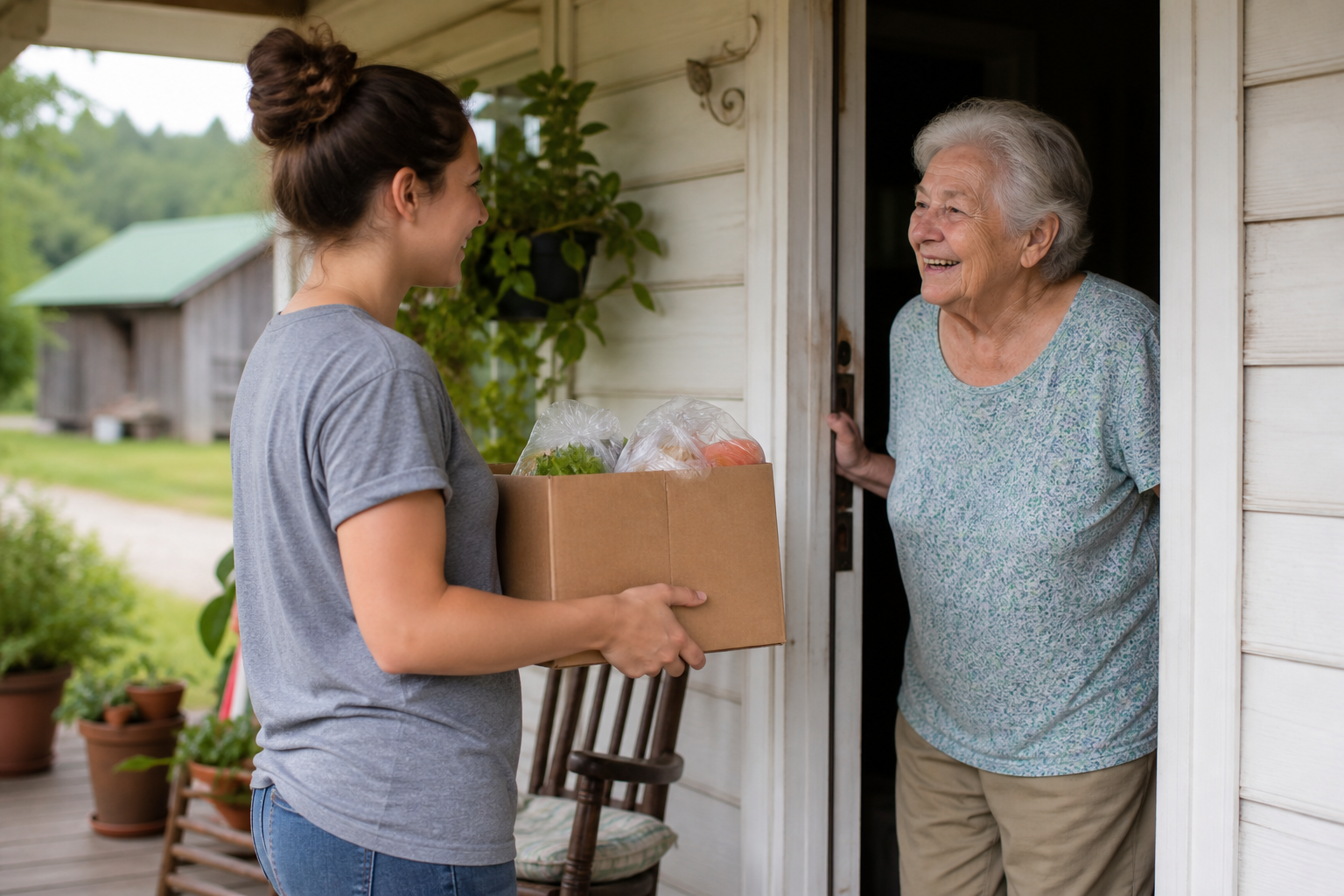
Our senior delivery program was built to remove every obstacle we could identify. Volunteers bring groceries directly to the door on a regular schedule, at no cost, with no application process, no income verification, and no paperwork to fill out at a kitchen table.
Deliveries are tailored to how seniors actually eat and cook: easy-open containers rather than heavy cans, lower-sodium options, soft foods where dental issues make chewing difficult, single-serving portions that will not spoil before they are finished, and fresh produce from our local farm partners. Volunteers carry bags all the way inside and, when asked, help put items away.
The Part That Isn't About Food
Ask our delivery volunteers what matters most about their route and almost none of them start with groceries. They talk about the conversation on the porch. For a homebound senior, a volunteer at the door may be the only person they speak with all week.
Those visits also function as a quiet check-in. Our volunteers have noticed a fall, an untreated illness, a heating system that stopped working, and food left untouched from the previous delivery — and connected that neighbor with help. Showing up regularly means somebody notices when something is wrong.
How You Can Help a Neighbor
If you know an older adult who is struggling — a parent, a neighbor, someone from your congregation who stopped coming — please reach out on their behalf. Many will never make the call themselves, but almost all say yes when someone else opens the door.
- Refer a senior for delivery, anonymously if that is easier for them
- Volunteer for a delivery route that fits your own schedule
- Donate to fund groceries and fuel for weekly deliveries
- Simply check on the older adults on your street
Contact us at admin@charityfoodministry.org or through our contact form. No neighbor should grow old and hungry in a community that would gladly have helped, if only it had known.
Deliver to a Senior