Why Fresh Produce Matters in Food Assistance
Canned goods keep people alive. Fresh produce helps them thrive. That distinction shapes how we build every food box that leaves our building, and it is the reason we invest in refrigeration, farm relationships, and volunteer hours that a purely shelf-stable pantry would never need.
Full Is Not the Same as Nourished
Traditional emergency food is built around what survives a warehouse: canned vegetables, pasta, rice, boxed sides, and shelf-stable protein. Those items are essential, and we distribute them in volume. But a diet made entirely of them tends to be high in sodium and refined carbohydrates and short on the vitamins, fiber, and potassium that come from fresh fruits and vegetables.
That is why food insecurity and diet-related illness so often appear in the same household. A family can be receiving enough calories to stop feeling hungry while still missing most of what their bodies need. Hunger relief that ignores nutrition solves the emergency and leaves the health problem behind.
The Cost Trap Families Face
Ask anyone stretching a tight grocery budget and they will tell you the same thing: fresh food is the first item cut. It costs more per calorie, it spoils if plans change, and a bag of vegetables that goes bad is money a struggling household cannot afford to lose. Under pressure, the rational choice is the shelf-stable one.
Charitable food distribution can break that trap in a way individual budgets cannot. When produce arrives free, the risk calculation disappears. Families do not have to gamble grocery money on perishables — and in our experience, when fresh vegetables are simply available, they get taken and they get eaten.
How We Get Fresh Food Into Boxes
Getting produce to a family's table takes more infrastructure than canned goods do. It requires cold storage, fast turnaround, sorting labor, and a supply chain measured in days rather than months. We built each of those pieces deliberately.
Our partnership with two local Chester County farms supplies roughly 1,000 additional pounds of fruits and vegetables every month, collected as field surplus and moved into distribution within about 48 hours. A dedicated volunteer crew grades, cleans, and packs it the same day it arrives, so families receive food near peak freshness rather than at the end of its life.
Dignity, Culture, and Choice
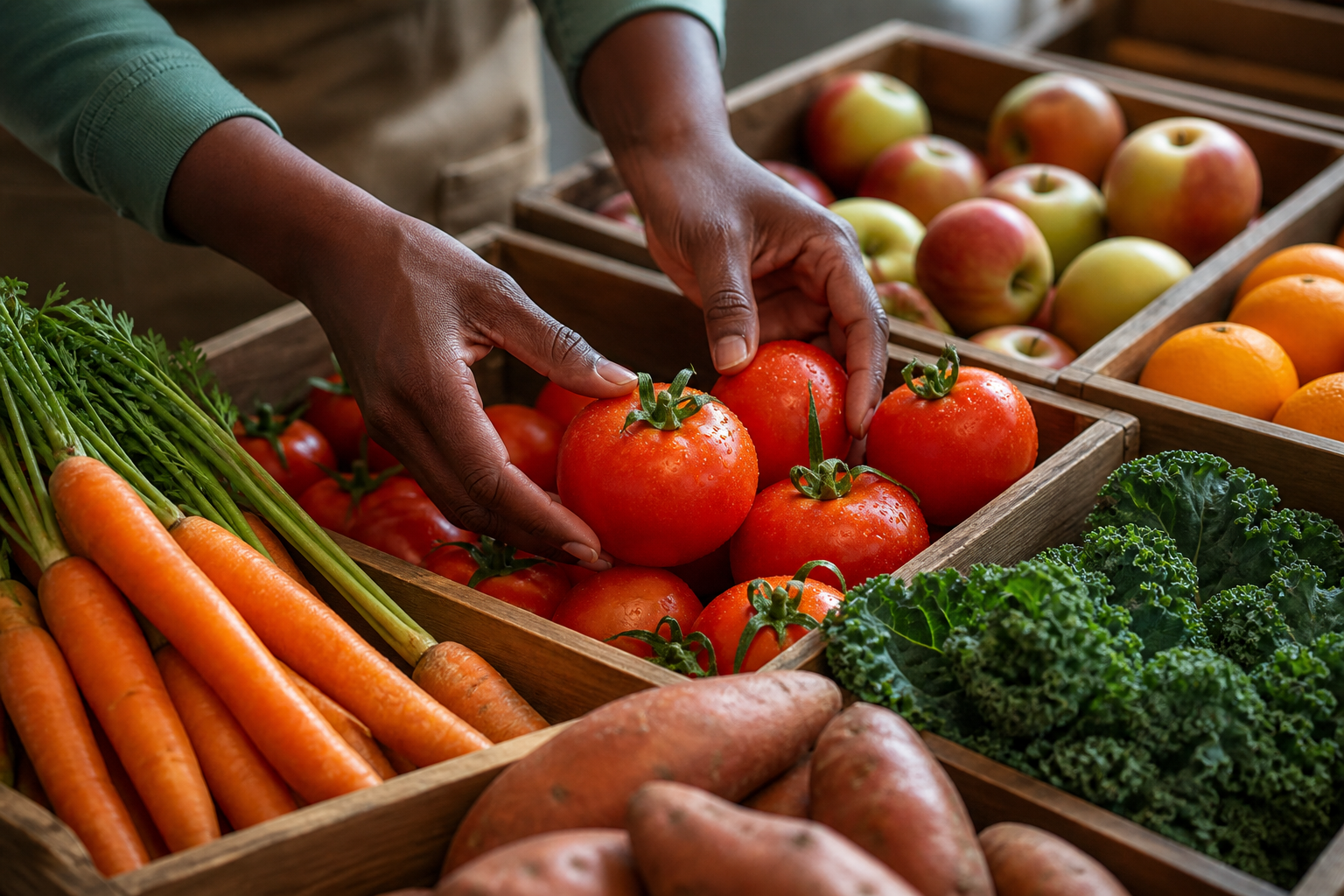
Fresh produce also changes what receiving help feels like. There is a real difference between being handed a box of cans and being able to choose collards, sweet potatoes, tomatoes, and peppers — food you would have picked for yourself. Wherever we can, we use a client-choice model for exactly that reason.
Choice also respects the cook. Families know their own kitchens, their diets, their children's tastes, and the dishes that mean home to them. Handing someone whole ingredients trusts them to be the expert on their own table, which is a form of respect that no calorie count captures.
Help Us Keep It Fresh
Fresh food access is the part of our budget most dependent on ongoing community support, because refrigeration, fuel, and produce containers are recurring costs rather than one-time purchases.
- Donate to fund cold storage, farm pickups, and produce packing supplies
- Join the weekly volunteer crew that sorts and packs fresh produce
- Growers, community gardens, and backyard gardeners can donate surplus harvest
Reach us at admin@charityfoodministry.org or learn more on our Programs page. Everyone deserves food that does more than fill a stomach.
Fund Fresh Produce